
A routine, not a test
Litter training grows from a consistent space, patience and careful observation. Your rabbit does not know the rules of your living room: they follow preferences and may mark their territory. The aim is to offer a corner that is easy to recognise, use and find again. A few droppings outside the tray do not mean starting from scratch. Watch where your rabbit urinates, when they visit the feeding area and how they move through the room. These details are more useful than a rigid schedule or a promise of perfect results within a particular number of days.
Work with the chosen corner
Place the tray where your companion already tends to toilet, often in a corner. Avoid moving it every morning to suit the room’s appearance: predictability matters more than hiding the tray. If several spots are used, add a second tray temporarily instead of creating more obstacles. The training area must remain large enough for running, stretching and resting. Limiting access to some rooms can simplify early learning, but confinement in a tiny cage is not a litter training method. Preserve a hideout and clear routes, and make sure your rabbit still has plenty of daily movement and opportunities to explore.
Choose a comfortable tray
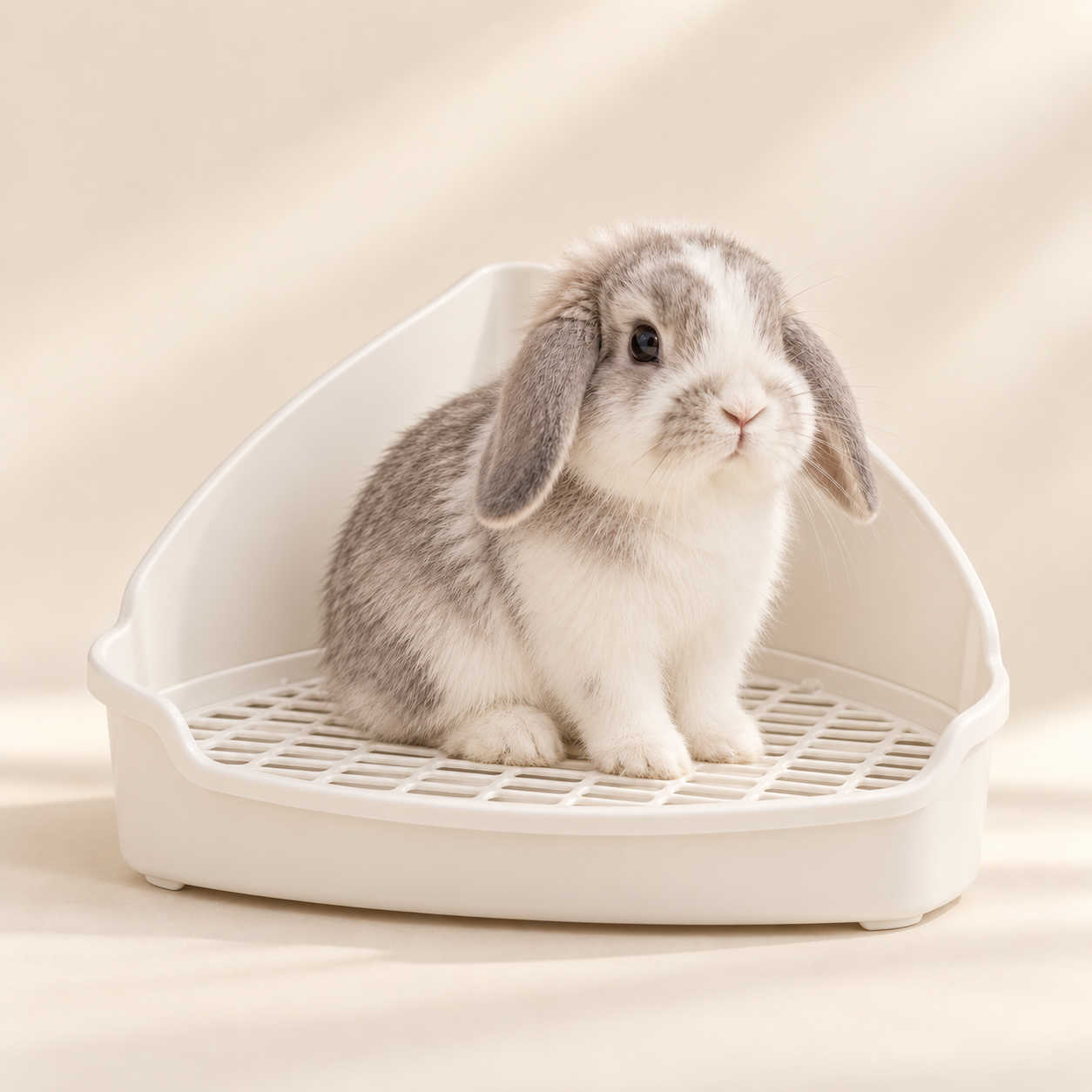
A suitable tray allows your rabbit to sit fully inside and turn around without difficulty. A corner model can be convenient, but its shape alone cannot tell you whether it fits. Watch the entrance, the rabbit’s posture and the remaining space once hay is arranged nearby. With a grid tray, check that paws are supported and claws cannot become trapped. If your companion avoids the grid, try another surface. An older rabbit or one with reduced mobility may need a low entrance and a comfortable base. Easy cleaning for you should always go together with comfortable use for your rabbit.
Select appropriate litter
Look for absorbent, low dust litter that is suitable for use with rabbits. Unscented paper based material is one option to consider. Avoid clumping cat litter, scented products and very dusty materials. Rabbits investigate with their mouths, so watch for ingestion and change the material if it causes problems. Use enough litter to absorb urine without unnecessarily filling the tray. Feeding hay should stay clean and separate from wet areas. Check moisture daily and remove soiled material before a strong smell develops. Do not assume that a product is suitable simply because the packaging shows a small animal or describes the material as natural.
Keep hay close and clean
Many rabbits enjoy eating hay beside their toilet area. This association can make the tray inviting, provided the supply stays clean and accessible. Put a safe rack at a natural feeding height or arrange hay in a part of the tray that remains dry. Your rabbit should not have to stretch their neck or push their head between bars. Refresh hay regularly even when some of it looks untouched. A supply that is difficult to reach or tightly compressed can discourage eating. The purpose is to support a familiar behaviour, never to restrict hay access when your rabbit is somewhere else in the room.
Encourage without punishment
When your rabbit uses the tray, let them finish peacefully and support the routine with calm interaction. After an accident, collect droppings and place a few inside the tray to provide a familiar scent cue. Clean suitable surfaces with a compatible product and rinse and dry according to its directions. Never shout, chase your rabbit or push their nose into urine. That teaches fear rather than a reliable routine. Avoid picking them up every time they start looking for a toilet corner, too. Handling can interrupt learning and increase stress, particularly for a rabbit still becoming confident in a new home.
Expand the territory gradually
Once the routine is reliable in the main living space, open another area while leaving the original tray in place. Add a similar toilet station in the next room if travelling distances increase. Supervise early explorations, protect cables and use washable floor coverings where useful. If accidents become frequent, simplify the arrangement again without removing daily exercise. Moving home, introducing furniture or adding another animal may change established habits. Allow time for adjustment and keep feeding times, the hay station and the resting area predictable. Observe which route your rabbit takes rather than expecting them to understand a new floor plan immediately.
Notice sudden changes
A previously trained rabbit who suddenly urinates in unusual places may have more than a learning problem. Pain, reduced mobility or urinary difficulties deserve veterinary attention. Straining to urinate, visible blood, reduced appetite or an unfamiliar posture call for prompt advice. Sexual maturity may also increase marking: discuss neutering with a rabbit experienced veterinarian, considering your companion’s age and health. Avoid replacing every accessory at once in the hope of solving the issue. Record what you see, when it happens and any recent household changes. This information helps a professional understand the situation and distinguish environmental changes from potential health problems.
A simple daily checklist
Each day, check that the tray is dry, your rabbit can enter comfortably and the hay is within reach. Remove soiled material, top up litter and inspect the rack’s attachments. Clean more thoroughly whenever the tray’s condition requires it while keeping the arrangement familiar. To choose equipment, explore our corner litter tray and hanging metal hay rack, then confirm dimensions before ordering. Success is not a perfectly spotless room at every moment. It is a relaxed rabbit, a comfortable setup and a routine you can maintain consistently. Keep observing, make one adjustment at a time and allow your companion to progress at their own pace.
Further reading: general guidance from Rabbit Welfare Association & Fund and House Rabbit Society. This guide does not replace individual advice from your rabbit veterinarian.
Rabbit Welfare Association & Fund · House Rabbit Society